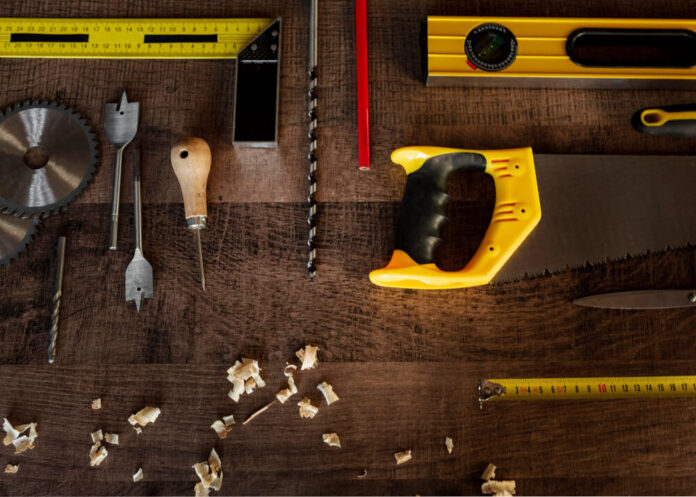

Construction is a big industry, but one predicated on very small things. On an industrial scale, it can be easy for contractors and companies to lose sight of this when not actively involved in planning and design and for the individual worker, it can be easy to lose sight of just how important their comparatively-small contribution is to the greater whole.
One of the key ways in which this truth is handily realised is quite materially, through the importance of precision and through the importance of precision tools in achieving high-quality results. While large machinery often gets the attention of investors and onlookers, a project is made and made safe through the smaller, precise tools. Here, we have an opportunity to explore this properly; from the importance of precision and accuracy to the tools that make precision and accuracy possible.
Why Precision and Accuracy Are Critical
When you consider construction projects with any degree of depth, the importance of precision and accuracy is not so much of a mystery. This is particularly true in the tech-led construction environment of today, where even super-sized structures are effectively built in principle before they’re erected – with precise steel frameworks that account for everything from land surveys to heat fluctuation.
In smaller-scale projects, it’s counterintuitively easier to discount the importance of true precision. Small mistakes can be rectified simply, and many precision errors simply result in a less-aesthetic end-result easily covered over. The exception to that rule comes in the form of finishing, which we’ll explore shortly.
Tools That Deliver Precision on Site
Scale is central to the topic of precision, and precision tools follow this same rule. There are huge industrial machines with tolerances that exceed their aesthetics, but that one naturally would not trust with a localised task; large-scale drills and bored piling machines, for instance, are able work within verticality tolerances of 1%, but deal in metres and centimetres.
For more detailed work, even more precision is necessary – and this is supplied, amply, by a new generation of handheld tools and tool parts. Routers are designed to cut in detailed finishes with millimetre precision, and quality router bits enable that with minimal stressing of the material in question (be it wood or metal).
Improving Workmanship Through Better Tool Selection
This should illustrate, if anything, that good tools are worth the investment, no matter the size of the business in question. Without the right tools, the best-case scenario is a shoddy finish; the worst is a construction that simply does not come together in a safe manner. By investing in the right tools, a contractor improves efficiency, consistency, safety, and naturally, client satisfaction.