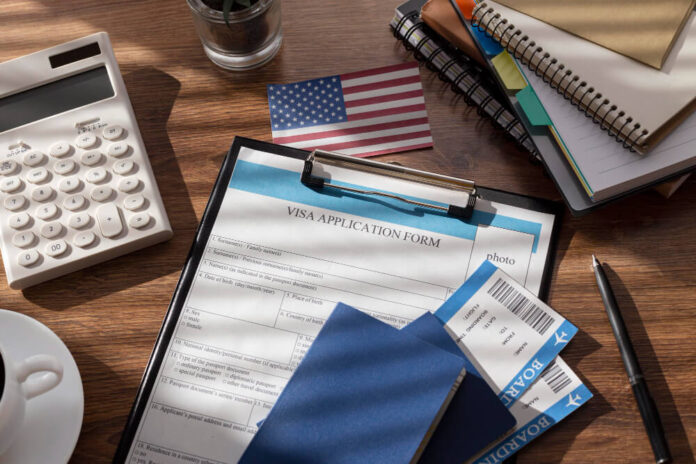

In the U.S. immigration system, your legal stay is governed by the date stamped on your I-94 record, not necessarily the expiration date on your visa. When you need to remain in the country longer than originally planned, or if you wish to switch from one nonimmigrant category to another, Form I-539, Application to Extend/Change Nonimmigrant Status, is the essential tool you must use.
Over the years USCIS has significantly modernized the processing of this form. USCIS has eliminated the biometrics fee and no longer routinely requires biometrics for most I‑539 applicants, though it can still request biometrics in individual cases.
Common Uses for the I-539
The Form I-539 is a versatile application used by a wide variety of nonimmigrants. The most frequent scenarios include:
- Extension of Stay (B-1/B-2): For visitors who need more time for tourism, family visits, or medical treatment.
- Change of Status (F-1/M-1): For individuals currently in the U.S. on a different visa who have been accepted into an academic program and wish to become students.
- Dependent Extensions (H-4/L-2/O-3): For spouses and children of professional workers who need to extend their stay in alignment with the principal worker’s visa.
- Reinstatement of Status: For students who have inadvertently fallen out of status and are seeking to correct their record.
The “45-Day Rule” and Timely Filing
In 2026, the most critical piece of advice for any applicant is to file early. USCIS officially recommends submitting your Form I-539 at least 45 days before your current authorized stay expires.
If you file a “timely” and “non-frivolous” application, you are generally granted a “period of authorized stay” while the case is pending. This means that even if your original I-94 expires while you are waiting for a decision, you are not considered to be “unlawfully present” for the purposes of the 3-year or 10-year bars. Whether you can keep studying or working while your I‑539 is pending depends on your category and whether you are seeking an extension vs. a change of status. Always check category‑specific rules or consult an immigration attorney.
Proving Financial Sufficiency and Intent
Because the form I-539 is for nonimmigrants, the burden of proof is on the applicant to show that they do not intend to stay in the U.S. permanently. Your evidence packet should focus on:
- Proof of Support: Bank statements or a Form I-134 Declaration of Financial Support showing you have enough money to cover your expenses without working illegally.
- Ties to Home: Evidence that you have a residence, job, or family waiting for you in your home country.
- Reason for Extension: A clear, written statement explaining why you need the additional time and a specific date for your planned departure.
2026 Digital Filing Benefits
Most applicants in 2026 are encouraged to file via the myUSCIS online portal. Digital filing offers several advantages:
- Immediate Receipt: You receive your receipt number instantly, which is vital for proving you filed before your status expired.
- Lower Fees: Online filing typically carries a lower administrative fee than paper-based submissions.
- Direct Communication: You can respond to Requests for Evidence (RFEs) instantly through the portal.
Conclusion: Protecting Your Future Options
Even a short overstay can trigger visa revocation and create serious problems for future travel, and longer periods of unlawful presence can lead to multi‑year reentry bars. By proactively filing Form I-539 and understanding the 2026 requirements for financial proof and timely submission, you can navigate your stay with confidence and keep your path to future U.S. travel or residency clear.