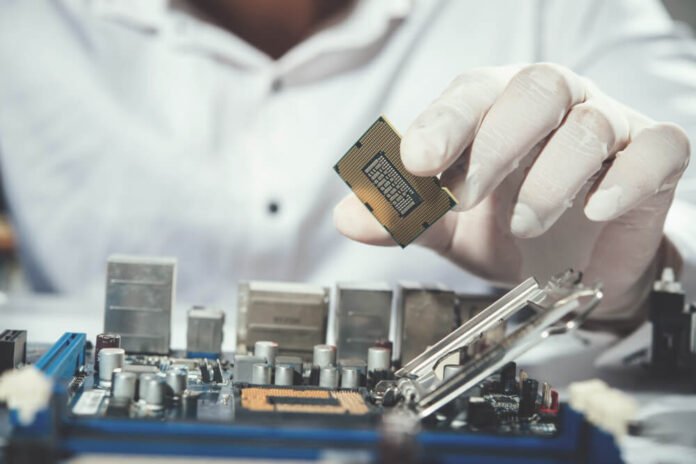

Most enterprise IT teams spend months planning a GPU upgrade. They obsess over the new hardware specs, the provisioning timeline, the power draw. Then the new racks arrive, and suddenly nobody has a clear answer to the obvious follow-up question: what do we actually do with the old ones?
The answer matters more than most teams realize. Retired data center GPUs carry real residual value, come with real data security obligations, and create real environmental consequences if they get mishandled. Getting this transition right takes a plan, not a forklift and a storage closet.
Why the Upgrade Cycle Is Speeding Up
AI model development is moving faster than most hardware budgets anticipated. The pressure to refresh GPU infrastructure every two to three years now comes from two directions at once: newer NVIDIA and AMD architectures that deliver dramatically better training and inference throughput, and the fierce competition among cloud providers and enterprises to keep pace with AI capability.
The GPU market was valued at $70 billion in 2024 and is projected to reach $237.5 billion by 2030, a compound annual growth rate of 22.58% , according to a June 2025 market report cited by Business Wire. That pace of market expansion means hardware generations are stacking on top of each other fast. What was a flagship A100 cluster in 2022 is now a second-tier inference workhorse. What was a cutting-edge H100 deployment in 2023 is already being compared unfavorably to Blackwell-class systems.
For IT teams managing that transition, the clock starts ticking the moment a purchase order for new GPUs gets signed. From that point, every week the old hardware sits idle in a rack or a crate is a week of residual value walking out the door.
The Value Cascade Clock: A Framework for Thinking About GPU Asset Life
Here’s a way to think about what happens to a data center GPU from the moment it gets decommissioned. Call it the Value Cascade Clock. The hardware doesn’t lose value uniformly over time. It loses value in bursts, triggered by specific market events.
In the first year after a new GPU generation launches, the previous generation drops noticeably in secondary market pricing as buyers shift their attention to the newer architecture. In years two and three, pricing stabilizes somewhat because the hardware still has legitimate inference and batch processing utility. By year four, the addressable buyer pool shrinks, and terminal value becomes the ceiling. The practical implication is simple: the window for recovering serious value is front-loaded, and most teams miss it by sitting on the hardware too long.
Consider a concrete example. A Midwestern cloud provider decommissions 200 H100 80GB GPUs in late 2025 after receiving their first Blackwell delivery. If they move quickly, they are transacting at pricing that still reflects strong inference demand. If they wait eighteen months while the hardware collects dust during internal bureaucratic review, they are selling into a market that has been reshaped by the B200 production ramp. GPU depreciation in AI infrastructure follows accelerated curves driven by rapid generational improvements, with year-one depreciation running 20% to 30% as next-generation chips launch , according to analysis published by AltStreet Investments in January 2026. An H100 purchased near peak pricing has a projected trajectory that drops meaningfully at each successive generation milestone.
The Data Security Problem Nobody Talks About in the Planning Meeting
GPU memory is not just computational real estate. For any organization that has run large language model training, inference pipelines, or sensitive data workloads on that hardware, the VRAM and associated system storage carry real data residue risk. Handing retired GPUs to an unvetted reseller, donating them to a surplus equipment program without proper data destruction, or simply shipping them to a warehouse is not an acceptable practice under most enterprise data governance frameworks.
This is not a minor point. Discarded electronics account for an estimated 70% of the heavy metals found in U.S. landfills , according to the EPA. The physical toxicity problem and the data security problem point in the same direction: enterprise GPU retirement needs a certified, documented process, not an improvised one. The right ITAD partner will provide R2 or e-Stewards certification documentation, a chain of custody record, and certified data destruction confirmation on every unit.
When evaluating buyback or liquidation options, the certification stack matters as much as the payout offer. An uncertified buyer who offers a higher quote and then resells hardware without proper data sanitization creates liability that the original organization still owns. No CFO wants to explain that tradeoff after a data incident.
Secondary Markets Are Real, But Volatile
The secondary market for data center GPUs is genuinely active and genuinely unpredictable. The H100, released in March 2023, experienced dramatic secondary market pricing volatility, with used and refurbished units trading as high as $50,000 per GPU during mid-2024 scarcity, then dropping sharply as supply increased and buyer power returned , according to Hashrate Index research published in April 2026. Anyone who tells you there is a simple formula for what your used GPU fleet is worth today is oversimplifying. Real secondary market pricing depends on the specific SKU, current supply, buyer composition, refurbishment status, and macro factors like tariff policy.
That volatility is exactly why timing matters, and why using a specialist buyer with live market intelligence beats posting a batch of GPUs to an online auction and hoping for the best. A buyer who actively tracks secondary GPU pricing can give you an accurate quote based on where the market actually is right now, not where it was six months ago. For teams looking to sell gpu hardware from a decommissioned AI cluster, working with a certified ITAD provider who specializes in GPU buyback is the approach that protects both the asset value and the data security obligation simultaneously.
See the table below for a simplified illustration of how secondary market GPU values behave relative to new pricing across different generations and holding periods.
| GPU Model | Launch Year | Approx. New Price (Peak) | Secondary Value at Year 1 | Secondary Value at Year 3+
|
|---|---|---|---|---|
| NVIDIA V100 | 2018 | $8,000–$10,000 | ~70% of new | ~10% of new ($500–$1,000) |
| NVIDIA A100 | 2020 | $10,000–$15,000 | ~75% of new | ~40–50% of new ($4,000–$7,000) |
| NVIDIA H100 | 2023 | $25,000–$40,000 | ~70–80% of new | Est. 30–45% (market-dependent) |
Secondary market value estimates are illustrative ranges based on AltStreet Investments (January 2026) and Hashrate Index (April 2026) analysis. Actual values vary by condition, SKU, and market timing.
“GPU longevity is one of the most consequential open questions in AI infrastructure economics,” notes research published by Hashrate Index in April 2026, reflecting a broader industry consensus that no fixed depreciation schedule reliably predicts what a retired GPU will fetch on the secondary market.
A Practical Checklist for GPU Decommissioning
Here is what a responsible GPU retirement process actually looks like in practice:
- Start before the new hardware arrives. Get quotes on your existing GPU fleet while the hardware is still running. Current operational status is the single biggest factor in a strong payout offer.
- Document every unit. Serial numbers, hours logged, any repair history. A buyer who offers accurate pricing needs accurate information, and missing documentation always works against the seller.
- Confirm certification requirements with your legal or compliance team. R2v3, NIST 800-88, HIPAA applicability, and state-level data destruction requirements all have implications for which buyers you can work with.
- Get at least two quotes, but prioritize certified buyers over uncertified higher offers. The gap between a certified ITAD provider and an uncertified reseller is often smaller than teams assume once you account for liability exposure.
- Insist on chain-of-custody documentation. A reputable buyer provides this automatically. If a buyer is reluctant to commit to it in writing, that tells you something important.
GPU refreshes in AI infrastructure are going to keep happening. The hardware generation cycle is not slowing down. The teams that treat decommissioning as part of the upgrade plan rather than an afterthought will consistently recover more value and carry less risk. That’s not a sophisticated insight. It’s just discipline applied at the right moment.
What does your current process look like for handling retired GPU hardware? If the honest answer is “we figure it out when we get there,” now is a good time to build something more deliberate.