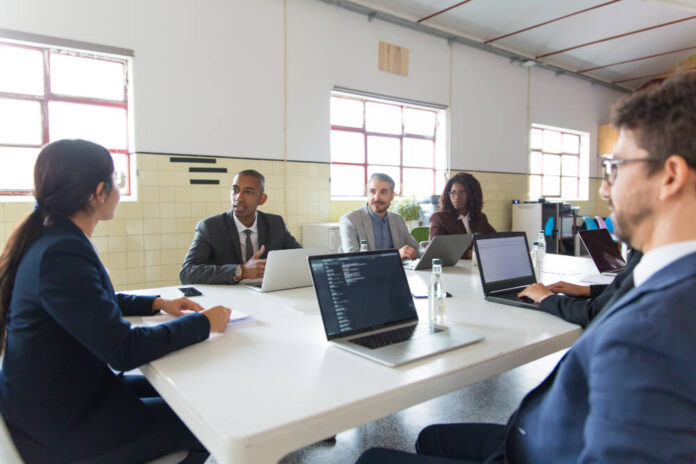

In the current corporate landscape, we spend an incredible amount of energy discussing the “future of work.” We debate remote vs. hybrid models, the integration of AI into daily workflows, and the psychological nuances of leadership. Yet, there is a very physical, very tangible aspect of the employee experience that often gets relegated to the facilities management budget rather than the strategic growth plan: the office itself.
The physical environment isn’t just a place where work happens. It is a silent communicator of a company’s values. It tells your team whether their comfort and dignity are priorities or merely overhead costs.
When we talk about workspace optimization, we usually focus on the “sexy” stuff: open floor plans, ergonomic standing desks, or high-end espresso machines in the breakroom. However, the true test of a company’s commitment to its people is found in the most utilitarian spaces.
This is where the intersection of functionality and aesthetics becomes a powerful tool for morale. Keeping up with modern commercial bathroom design ideas isn’t just about staying trendy. It is about acknowledging that the baseline of professional respect begins with providing high-quality, private, and well-maintained facilities. You know, the things people usually only notice when they aren’t working right.
And that is where the brand promise becomes a lived experience.
The Psychology of the “In-Between” Spaces
There is a specific psychological phenomenon that occurs when an employee moves from a high-tech, polished conference room into a neglected or outdated common area. It creates a “cognitive dissonance” regarding the company’s brand. If a business claims to be cutting-edge and people-first, but its physical infrastructure feels stuck in 1985, complete with that flickering fluorescent hum, the employees feel that disconnect. These “in-between” spaces, like the hallways and the restrooms, are the connective tissue of the workplace.
But why do we settle for less when it comes to the spaces people use the most?
Psychological safety in the office also extends to sensory comfort. Poor lighting or cramped common areas trigger a subtle stress response that accumulates over the course of a forty-hour work week. We have all been in that one office that felt like it was draining our energy. On the flip side, when a business invests in universal design, making environments usable for everyone regardless of their physical needs, it fosters a sense of belonging. It shows that the company has thought about the human being, not just the “human resource.”
Operational Excellence through Better Design
From a management perspective, staying ahead of design trends is a matter of long-term cost-efficiency. The “buy cheap, buy twice” rule applies heavily to commercial infrastructure.
High-traffic areas undergo immense wear and tear. When a business chooses durable, easy-to-maintain materials and layouts, it is actually protecting its bottom line.
However, the benefit goes beyond maintenance costs. Efficiently designed facilities reduce the “friction” of the workday. Think about a large-scale office or a manufacturing plant. If the essential facilities are poorly located or there aren’t enough of them, it creates micro-delays in the daily flow. It could be a three-minute walk, but multiply that by a hundred people. These delays result in measurable productivity losses. More importantly, it creates a sense of frustration that bleeds into the work itself.
The Brand Impact on Clients and Partners
For many businesses, the office is also a stage. It is where you host potential investors, top-tier talent during interviews, and major clients. A visitor’s perception of your operational health is formed within the first ten minutes of entering the building. They look at the lobby’s cleanliness, the state of the technology, and, yes, the condition of the shared facilities.
What does your space say about your organization when you aren’t in the room?
In a competitive market, excellence is a holistic pursuit. You can’t claim to have a culture of “attention to detail” if your physical space suggests otherwise. By integrating modern design standards throughout the entire facility, a business reinforces its brand promise at every single touchpoint. It shows that the organization is disciplined, forward-thinking, and respectful. It is the difference between a place you have to go and a place you want to be.
Conclusion
As we move further into an era where the “employee experience” is a key competitive advantage, the role of physical infrastructure will only grow in importance. Design is the silent language of leadership.
By viewing physical standards not as a burden of compliance, but as a blueprint for professional dignity, businesses can build environments that truly support their most valuable asset: their people. It is not always a perfect system, but it is real. It is about the quality of the world we inhabit while we do the work.