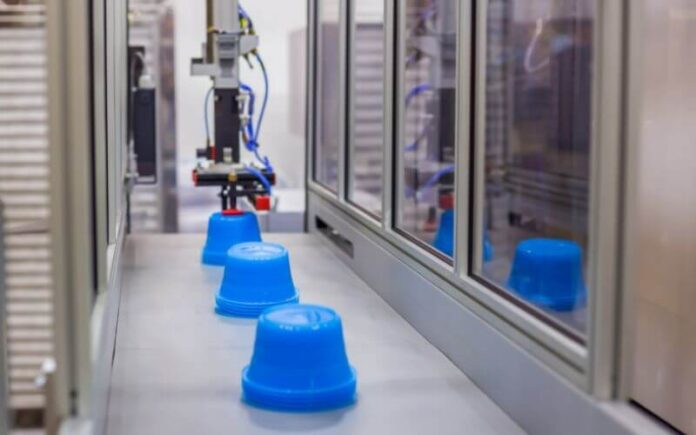

Bringing a new product to life involves dozens of decisions, but few are as critical as choosing the right manufacturing process. The method you select will influence everything from cost and durability to scalability and design freedom. For many businesses, especially those aiming for high-volume production and consistent quality, plastic injection molding stands out as a powerful option. Yet it’s not always the right answer. Understanding when this process truly makes sense can save time, money, and frustration down the line.
Continue reading to learn why plastic injection molding may be the right choice for your product.
Scaling Production With High-Volume Manufacturing
One of the strongest arguments for plastic injection molding is its ability to handle large production runs with remarkable efficiency. Once a mold is created and fine-tuned, the manufacturing cycle becomes fast and repeatable. The injection molding process itself is engineered for speed, consistency, and minimal material waste. Thousands or even millions of identical plastic parts can be produced with minimal variation. For companies planning mass-market distribution, this level of scalability is difficult to match with other manufacturing techniques.
Initial tooling costs can be significant. Designing and machining a custom mold requires investment, precision engineering, and time. However, when production volume climbs, the cost per unit drops dramatically. For startups expecting rapid growth or established brands launching high-demand items, injection molding often becomes the most cost-effective long-term solution. The upfront expense is balanced by lower per-part costs and streamlined production.
To do this effectively, you can rely on reputable plastic injection molding companies that offer early-stage design consultation. Their engineering teams evaluate part geometry, material selection, and manufacturability before tooling begins, helping to prevent costly revisions later. This collaborative approach optimizes the entire production workflow to improve efficiency and reduce waste while ensuring consistent quality and smooth high-volume runs.
Achieving Consistency With Tight Tolerances
Consistency matters more than many realize. Products that must fit together precisely, such as enclosures, connectors, and medical components, rely on tight tolerances. Plastic injection molding excels at delivering uniform parts across large batches. Each cycle replicates the same shape and dimensions defined by the mold cavity, which reduces variations and ensures compatibility with other components.
Quality control is also easier to maintain once the process is dialed in. Modern injection molding machines use advanced controls to regulate temperature, pressure, and cooling time. These factors directly influence part integrity. With proper setup and monitoring, manufacturers can maintain strict standards over extended production runs. This reliability makes injection molding especially valuable in industries like medical devices, automotive systems, and consumer electronics.
Supporting Complex Designs With Intricate Features
Design flexibility is another reason many engineers gravitate toward injection molding. The process supports intricate geometries that would be difficult or expensive to produce using machining or fabrication. Features such as snap fits, living hinges, undercuts, and internal channels can be built directly into the mold design. This allows designers to reduce assembly steps and create more integrated products.
Material flow within the mold enables thin walls and fine details when designed properly. With the right gating and cooling strategies, even complex shapes can be manufactured efficiently. As a result, product developers can prioritize performance and aesthetics without compromising manufacturability. Instead of simplifying a design to accommodate manufacturing limitations, teams can leverage the strengths of injection molding to bring sophisticated concepts to life.
Offering Material Versatility for Performance Needs
Plastic injection molding accommodates a broad range of thermoplastic materials. From ABS and polypropylene to nylon and polycarbonate, each resin offers distinct characteristics. Some provide impact resistance, while others deliver chemical stability or flexibility. This variety gives product designers the freedom to match materials with functional requirements.
Additives can also enhance performance. Glass fibers improve strength. Flame retardants increase safety for electronic housings. UV stabilizers extend outdoor durability. By selecting the appropriate material blend, manufacturers can tailor products for specific environments and regulations. The ability to fine-tune material properties makes injection molding suitable for everything from household goods to industrial components.
Accelerating Production With Automated Processes
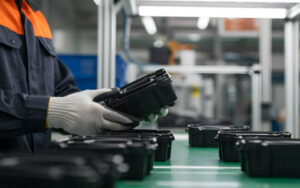
Automation plays a significant role in modern injection molding facilities. Robotic arms remove finished parts, conveyors transport components to packaging stations, and sensors monitor every stage of the molding cycle. These systems reduce human error and speed up output, especially during continuous production shifts.
Faster cycle times translate into shorter lead times once tooling is complete. For businesses with predictable demand and established distribution channels, this efficiency enhances overall business performance and provides a competitive advantage. Instead of worrying about bottlenecks or inconsistent output, managers can rely on a streamlined system that supports steady growth. Automated injection molding environments also improve worker safety by minimizing direct contact with heated materials and moving machinery.
Enhancing Product Strength With Structural Integrity
Strength and durability often influence the choice of manufacturing method. Injection molded parts can be engineered with reinforcing ribs, gussets, and uniform wall thickness to prevent weak points. Properly designed molds allow plastic to flow evenly, reducing the likelihood of internal stresses that might lead to cracking or warping.
Overmolding and insert molding further expand structural possibilities. Metal inserts can be encapsulated within plastic components to combine the benefits of both materials. Soft-touch grips can be molded onto rigid cores. These integrated approaches eliminate additional assembly steps and improve product strength . When structural reliability is critical, injection molding offers design solutions that support long-term durability.
Meeting Regulatory Standards With Controlled Manufacturing
Certain industries demand strict compliance with safety and quality regulations. Injection molding supports traceability and repeatability, both of which are essential for meeting regulatory standards. Batch tracking, machine parameter documentation, and material certification are standard practices in professional molding operations.
In sectors such as healthcare and automotive manufacturing, consistency and documentation are mandatory. Injection molding facilities often operate under controlled environments to prevent contamination and ensure reliable output. This level of oversight gives companies confidence when bringing regulated products to market. Choosing injection molding in these contexts can simplify audits and certifications.
Conclusion
Plastic injection molding is not a one-size-fits-all solution. Low-volume prototypes may be better suited to 3D printing or CNC machining. Products with extremely large dimensions or frequent design changes might require alternative approaches. Yet when production volume is high, design complexity is significant, and long-term cost efficiency matters, injection molding becomes a compelling choice.
Manufacturing decisions carry lasting consequences. By carefully evaluating your product’s requirements and growth expectations, you can determine whether plastic injection molding offers the right balance of scalability, consistency, and performance.