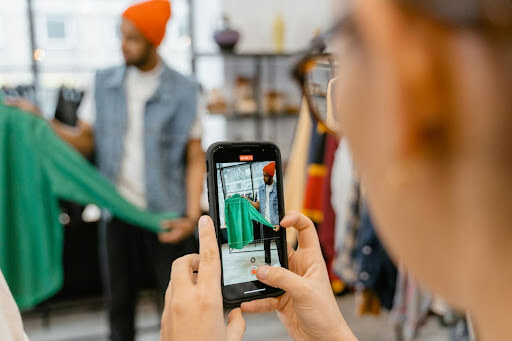

Retail tech has shifted. What was once a nice add-on is now a core system component. Retail image recognition is no longer a pilot experiment. It is feeding real, live data into big business decisions. You don’t just want to see shelves anymore. You want that sight tied directly into how your business runs into inventory, into planning, into the real heart of operations.
Visual data has to move from siloed dashboards into systems that already move money, stock, and people. That means ERP, POS, CRM all of it needs to listen to this stream of truth from your stores. Real integration turns visual events into actions that matter.
The 2026 Retail Reality: Beyond the Pilot Purgatory
Retailers have been kicking the tires on image recognition for retail for years. They’ve tested it in a handful of stores, often with good results. The problem? Most projects stall at pilot stage. They become “pilot purgatory” cool tech that never becomes useful. That happens because the tools sit on the side. They collect images and numbers, but they don’t touch the systems that run the business.
The Chief Operating Officer (COO) and Chief Technology Officer (CTO) know this. They see that without real connections to the enterprise backbone, visual intelligence gathers dust. To go big, you need to make sure that when an AI model spots an out-of-stock item or a misplaced product, that insight flows into decision systems right away. You want shelf data to affect replenishment workflows, forecasts, and allocation plans. Retailers that fail to connect visual data to core operations won’t move beyond early wins. And that’s why so many projects never deliver real value.
The Integration Wall: Why Most Visual AI Projects Fail
A big reason image recognition projects fail at scale is integration friction. Legacy ERP and POS systems are not built to digest streams of real-time AI data. These older systems operate in batches, often updating only once a day or less frequently. By contrast, visual AI generates events by the second. Bridging that gap is tough. Without a strategy, image data ends up in a silo.
Field teams still export CSVs. Analysts manually match shelf events to store records. That defeats the purpose of automation and costs time. When people have to clean and reconcile data manually, they stop trusting it. And when stakeholders stop trusting the data, investment dries up.
The key is planning for integration early. You need engineers who understand both the modern image recognition engine and the quirks of legacy platforms. You build adapters, APIs, and middleware that can translate signals from vision models into relevant ERP or POS triggers. It’s work, but it’s the only way IR stops being isolated and becomes a driver of real change.
Defining the Platform-Agnostic Vendor for 2026
Not all vendors are equal. Some require you to use their entire stack. Others lock you into proprietary tools that don’t play nicely with the rest of your systems. What you need is a platform-agnostic approach. That means open APIs, webhooks, and connectors ready for enterprise use. With flexible integration points, you can plug image recognition into what you already run whether SAP, Oracle, Salesforce, or custom ERP.
Platform-agnostic technology means you don’t rip and replace your systems. You extend them. A CTO wants to be able to swap or upgrade modules without a major overhaul. That’s the practical advantage. It keeps costs down and reduces risk. It also means the retail image recognition technology becomes a service to the business, not a burden. Vendors who insist on locking you in will slow you down. Those who give you options make it easier to scale and to pivot as your needs change.
The Single Source of Truth: Feeding Visual Data into SAP and Oracle
Your core ERP whether SAP, Oracle, or another enterprise suite — is where critical decisions are made. It’s where inventory lives, where procurement orders start, and where finance sees the business picture. If image events never reach that system, you’re missing the chance to unify insights with actions.
For example, when a shelf camera detects low stock on a top SKU, that event can trigger a replenishment request in SAP. No human needs to enter a ticket or make a call. Or consider logistics: a photo of a broken display could trigger a field service task in your CRM or WMS. This direct feed eliminates data lag, errors, and guesswork. It brings real physical reality into your digital backbone. Retail moves fast, shelves change daily, and delays cost money. By treating visual intelligence as part of the enterprise data stream, you stop reacting and start automating responses.

Technical Requirements for Seamless IR-to-ERP Orchestration
- Low-latency RESTful APIs with clear documentation for engineering teams.
- Support for edge computing, enabling data to be processed near the source.
- Robust ETL pipelines that normalize and cleanse visual data.
- Enterprise-grade security, such as OAuth 2.0, for cross-platform authentication.
- Built-in error handling and logging to manage noisy real-world conditions.
These building blocks keep the data flowing smoothly. APIs make systems talk. Edge computing keeps traffic light and responsive. ETL ensures that messy, raw events turn into clean records that the ERP can read. Security ensures all of this remains compliant. And logging helps you catch issues before they affect workflows. All these pieces matter because retail environments rarely behave perfectly. Lighting changes, angles vary, shelves move. Your integration has to handle that reality, not pretend it doesn’t exist.
POS Synergy: Real-Time Insights for the Front-End
POS systems record sales and inventory changes, but they only reveal what has already happened at checkout. Combine that with retail image recognition retail execution data and you open a new view. Visual data shows what’s on the shelf. POS shows what customers bought. When these two speak, you can detect phantom inventory when the shelf looks full, but POS shows no sales.
That could hint at mis-scans or theft. Matching shelf data to transactions also gives field teams immediate insights. They can see shelf health and sales velocity on their handhelds. It changes the store floor into a live laboratory. Instead of reacting next week, teams act now. If a high-value item is slipping into a competitor’s space, you know quickly. If a promotion isn’t executed, you spot it before it costs sales. Integrating these streams makes the store smarter and the back office lighter.
Future-Proofing the Stack: Scalability and the Agentic AI Wave
Retail doesn’t stand still. New waves of technology are coming, especially autonomous systems that make choices based on data without human intervention. You want your image recognition strategy to prepare you for that. Scalability is part of that picture. As your chain grows from 100 to 1,000 stores, your infrastructure should handle more images, more triggers, and more automated processes without breaking.
That means planning your data pipelines, your compute layer, and your integration scaffolding so they scale without cost exploding. Agentic AI systems that act on insights depends on integration done right. A disconnected image engine may give good recommendations.
But a connected one can trigger actions, orchestrate workflows, and improve outcomes without manual steps. That’s where future retail operations are headed. You build that now by ensuring your stack can grow and by choosing partners who understand that today’s image events are tomorrow’s autonomous decisions.
Conclusion
Your role as a retail leader is to turn data into decisions you can trust. Image recognition in retail can give you visibility you haven’t had before. But it only becomes a true business asset when it stops sitting in a separate silo and starts talking to your ERP, your POS, and your CRM. That means thoughtful integration, clear APIs, and a platform-agnostic mindset. When visual intelligence feeds into the systems you already run, you make better decisions faster and with fewer mistakes.
It also opens the door to what comes next autonomous operations, predictive actions, and store systems that make choices on your behalf. Retailers who do this will win more than efficiency. They’ll build a responsive business that can adapt as customer expectations shift. That’s not futuristic. It’s what practical, competitive retail looks like in 2026 and beyond. Image recognition in retail isn’t just tech. It’s a new way to link sight with strategy.